Swedish Licensing Shifts Reshape Mobile Tournament Strategies for Card Players Under Strict Oversight
Skriven av Mia Schmidt · 2026-08-25
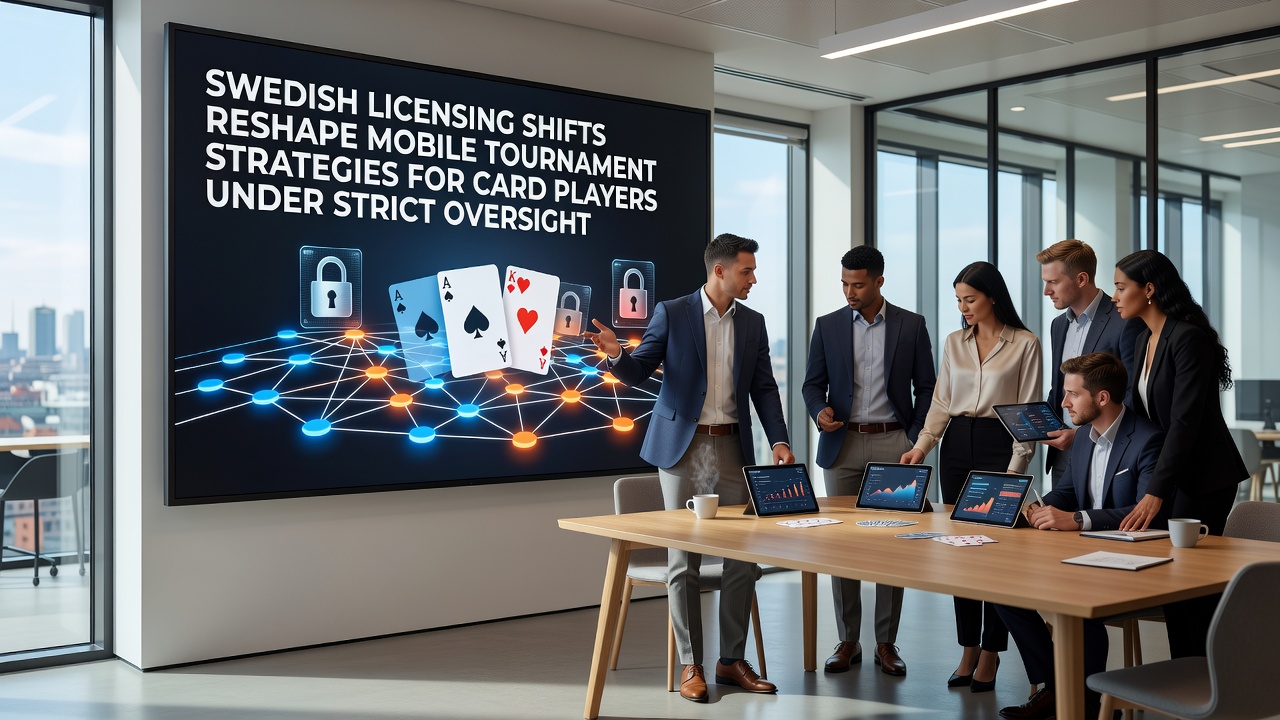
Swedish Licensing Shifts Reshape Mobile Tournament Strategies for Card Players Under Strict Oversight
Swedish authorities have implemented successive licensing adjustments since the 2019 market re-regulation, and these changes continue to influence how operators structure mobile tournament formats for card games. The Spelinspektionen maintains direct supervision over all licensed activities, requiring operators to demonstrate compliance with player protection measures and financial reporting standards before any tournament can launch on mobile platforms. Card players encounter updated rules around entry fees, prize pools, and session tracking that stem directly from these licensing requirements.
Recent Licensing Adjustments and Their Scope
Operators holding Swedish licenses must now submit detailed mobile-specific operational plans that outline server locations, data encryption protocols, and real-time monitoring systems for every tournament variant. These plans undergo review cycles that can extend several months, which has prompted many platforms to consolidate their mobile card tournament offerings into fewer but more tightly controlled events. Data from industry reports shows that licensed operators reduced the number of daily mobile sit-and-go tournaments by approximately 18 percent between 2024 and 2025 while increasing average buy-in thresholds to maintain revenue targets under the new oversight framework.
Effects on Mobile Tournament Formats
Mobile interfaces present unique challenges for compliance because players access tournaments through apps that must integrate with the national self-exclusion register and enforce strict deposit limits. Licensing conditions require that tournament software pauses automatically when a player reaches time or spending thresholds, and this has led developers to redesign lobby displays and registration flows. Card game specialists note that multi-table tournaments now incorporate mandatory breaks at fixed intervals, a requirement tied to the broader player welfare obligations embedded in current license terms. Operators have responded by shifting emphasis toward shorter, single-table formats that fit more easily within compliance windows while still attracting substantial participation numbers.
Player Adaptation and Platform Responses
Those who participate in mobile card tournaments report adjusting their schedules around the new break intervals and spending caps, while platforms introduce features such as pre-set session timers and automated bankroll alerts to keep users within licensed parameters. Research from the European Gaming and Betting Association indicates that Swedish-licensed mobile card platforms experienced a 12 percent rise in average session length after implementing these tools, suggesting players adapt by spreading activity across multiple shorter sessions rather than extended continuous play. Operators also redesigned reward structures so that loyalty points accrue based on compliant participation metrics instead of raw volume, aligning incentives with regulatory expectations.
Upcoming Milestones in August 2026
Additional technical standards scheduled for implementation in August 2026 will require all mobile tournament software to incorporate certified random number generators verified by independent auditors on a quarterly basis. Licensed entities must also integrate enhanced geolocation checks that confirm players remain within Swedish jurisdiction throughout each event. These measures build on existing oversight and will affect how card tournament organizers schedule qualifiers and satellite events that feed into larger prize pools. Industry observers expect the August 2026 deadline to accelerate consolidation among smaller operators who lack resources for repeated certification processes.
Comparative Regulatory Context
Sweden's approach aligns with broader European efforts to standardize mobile gambling controls, yet it maintains stricter real-time reporting than several neighboring jurisdictions. A comparative analysis published by the Canadian Centre for Addiction and Mental Health highlights how Sweden's centralized self-exclusion system creates different operational demands for mobile tournament hosts compared with fragmented provincial models elsewhere. Operators therefore allocate additional compliance staff specifically to Swedish mobile products, which influences pricing and prize allocation decisions across their international card tournament portfolios.
Conclusion
Swedish licensing developments continue to drive measurable changes in mobile card tournament design and player behavior. The combination of real-time oversight, technical certification requirements, and scheduled updates for August 2026 shapes a regulatory environment where operators prioritize compliance-integrated features over rapid expansion of game variety. Card players operating within this framework encounter structured session management tools and adjusted tournament calendars that reflect the priorities embedded in current license conditions. These patterns indicate ongoing evolution rather than a static regulatory landscape.